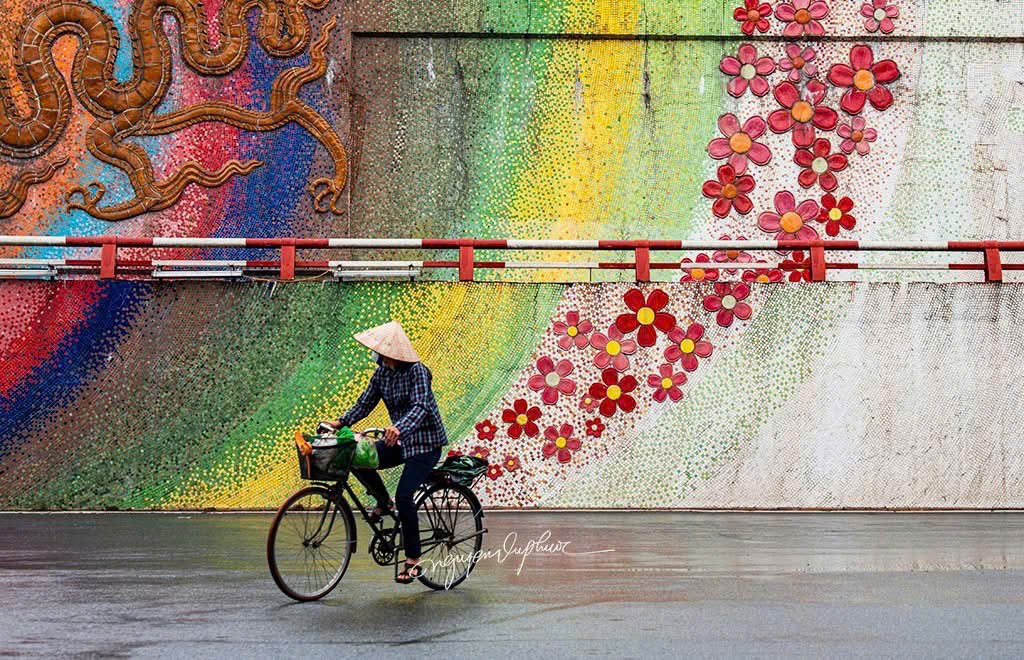
Vietnam is a country that rewards photographers throughout the year.
Unlike destinations that have a single peak season, Vietnam offers an ever changing variety of landscapes, festivals, cultures, and photographic opportunities. From the flower filled streets before Tet to the golden rice terraces of the northern mountains, from colorful fishing villages to misty mountain peaks above the clouds, every season brings something unique.
One of the most common questions photographers ask when planning a trip is:
"When is the best time to visit Vietnam for photography?"
The answer depends entirely on what you want to photograph.


Some photographers come for the rice terraces of Mu Cang Chai. Others dream of capturing ethnic markets in the northern mountains, floating markets in the Mekong Delta, colorful flower markets before Tet, or fishermen returning home at sunrise along the coast.
After many years of photographing Vietnam and guiding photography tours across the country, I have learned that there is no single perfect season. Instead, Vietnam offers a series of photography seasons, each with its own character and visual appeal.
This guide will help you plan your trip around the subjects that interest you most.

Festival and Cultural Season
January to March
The first months of the year are among the most exciting times for cultural photography in Vietnam.
As the Lunar New Year approaches, cities and villages become increasingly vibrant. Streets fill with flowers, families prepare for celebrations, and markets become busy with shoppers searching for decorations, food, and gifts.
For photographers, this period offers endless opportunities to document daily life and traditional customs. Flower markets become colorful outdoor studios where people, culture, and atmosphere come together.
In northern Vietnam, peach blossoms and plum blossoms paint the mountains with soft shades of pink and white. In the south, yellow apricot blossoms become a symbol of Tet and can be found everywhere from homes to public squares.
Traditional festivals also begin during this period. Temples become busy, incense drifts through the air, and communities gather to celebrate the arrival of spring.
Photography highlights:
• Tet flower markets
• Lunar New Year preparations
• Temple festivals
• Traditional customs
• Street photography
• Peach blossoms
• Plum blossoms
Recommended locations:
• Hanoi
• Ho Chi Minh City
• Cholon
• Moc Chau
• Bac Ha
• Sapa
• Quang Phu Cau Incense Village


Flower Season
January to July
Vietnam's flower season stretches across much of the year, offering photographers a constantly changing palette of colors.
The season begins with plum blossoms and peach blossoms in the northern mountains. Villages in Moc Chau, Bac Ha, and Sapa become covered in delicate white and pink flowers that contrast beautifully against traditional wooden houses and mountain landscapes.
As spring progresses, mustard flowers brighten the countryside, creating striking yellow fields that attract both photographers and locals.
March brings the blooming of the Bombax ceiba, known in Vietnam as Hoa Gao. These bright red flowers often appear against clear blue skies and are frequently found near temples, rivers, and traditional villages.
As temperatures rise, lotus season arrives. Lotus ponds become some of the most photogenic locations in the country, particularly around Hanoi, Hue, and the Mekong Delta.
By early summer, flamboyant trees burst into bloom, adding vivid red color to city streets and schoolyards throughout Vietnam.
Photography highlights:
• Peach blossoms
• Plum blossoms
• Mustard flowers
• Bombax ceiba flowers
• Lotus flowers
• Flamboyant flowers
Recommended locations:
• Moc Chau
• Bac Ha
• Sapa
• Hanoi
• Hue
• Mekong Delta


Rice Terrace Season
May to September
For many photographers, this is the most anticipated season of the year.
Northern Vietnam's rice terraces undergo a dramatic transformation over several months, creating three distinct photographic opportunities.
Water Season (May to June)
Farmers begin preparing the terraces for planting. Water fills the fields, creating beautiful reflections that mirror the sky and surrounding mountains.
This is one of the most rewarding periods for landscape photography.
Green Rice Season (June to July)
Young rice plants begin to grow, covering entire mountainsides with vibrant shades of green.
The landscape becomes fresh, peaceful, and incredibly photogenic.
Golden Rice Season (August to September)
As harvest approaches, the terraces turn brilliant shades of gold.
This is perhaps the most famous photography season in Vietnam and attracts photographers from around the world.
Photography highlights:
• Water reflections
• Green rice terraces
• Golden harvest landscapes
• Rural life
• Farmers at work
Recommended locations:
• Mu Cang Chai
• Hoang Su Phi
• Sapa
• Y Ty
• Bac Son Valley


Coastal and Fishing Season
June to August
Vietnam's coastline stretches for more than 3,000 kilometers, offering countless opportunities for photography.
Summer is an excellent time to explore fishing villages, coastal landscapes, and traditional maritime culture.
In central Vietnam, fishermen continue centuries old traditions. Circular basket boats, colorful fishing vessels, and busy harbors create fascinating visual stories.
Along the coast of Phu Yen, photographers may witness anchovy fishing activities, with fleets of boats gathering offshore and returning at sunrise.
Salt fields in Ninh Thuan and Khanh Hoa provide another unique subject during the dry season.
Photography highlights:
• Fishing villages
• Anchovy fishing boats
• Salt fields
• Coastal life
• Traditional fishing practices
Recommended locations:
• Phu Yen
• Nha Trang
• Ninh Thuan
• Binh Dinh
• Hoi An coastline


Autumn and Mountain Season
September to November
As summer fades, northern Vietnam enters one of its most beautiful periods.
Hanoi experiences its famous autumn season, with softer light, cooler temperatures, and a distinctive atmosphere that many locals consider the most beautiful time of the year.
Further north, mountain landscapes become increasingly dramatic. Ethnic markets become more active, and photographers can combine landscape, portrait, and documentary photography in a single trip.
Buckwheat flowers begin to bloom across Ha Giang, covering hillsides with shades of pink and purple.
Cao Bang offers spectacular scenery, including rivers, waterfalls, and mountain landscapes.
Photography highlights:
• Hanoi autumn
• Buckwheat flowers
• Ethnic markets
• Mountain landscapes
• Portrait photography
Recommended locations:
• Hanoi
• Ha Giang
• Cao Bang
• Dong Van
• Meo Vac


Cloud Hunting and Misty Landscapes
September to December
The final months of the year bring some of Vietnam's most atmospheric conditions.
Mountain regions often experience sea-like layers of clouds drifting through valleys and around peaks.
Photographers willing to wake before sunrise may be rewarded with extraordinary scenes of mountains emerging above the clouds.
Mist and fog add mood and mystery to landscapes, creating opportunities for more artistic and minimalist compositions.
Photography highlights:
• Sea of clouds
• Sunrise landscapes
• Misty valleys
• Mountain silhouettes
Recommended locations:
• Y Ty
• Ta Xua
• Sapa
• Ha Giang


Mekong Delta Seasonal Life
Unlike some regions that have a single peak season, the Mekong Delta offers photographic opportunities throughout the year.
Before Tet, flower markets fill the waterways with color. During the flood season, life adapts to rising water levels. Traditional floating markets continue to provide glimpses into river based commerce.
The region is also home to vibrant Khmer communities, whose temples, festivals, and daily life offer rich cultural subjects.
One of the most exciting events is the Ghe Ngo Boat Racing Festival, where long traditional boats race through the water before enthusiastic crowds.
Photography highlights:
• Floating markets
• Flower markets
• Khmer culture
• Boat racing festivals
• River life
Recommended locations:
• Can Tho
• Long An
• Soc Trang
• Chau Doc
• Ben Tre


Quick Photography Planning Guide
Choose your season based on the subjects you love most:
Festivals and Culture: January to March
Flowers: January to July
Rice Terraces: May to September
Fishing Villages and Coastal Life: June to August
Autumn Colors and Buckwheat Flowers: September to November
Cloud Hunting: September to December
Mekong Delta: Year Round


Final Thoughts
There is no single best time to visit Vietnam for photography.
The beauty of Vietnam changes with the seasons. Flower markets give way to lotus ponds. Green rice terraces become golden fields. Summer fishing villages lead into autumn mountains and winter clouds.
Whether you are passionate about landscapes, culture, street photography, festivals, portraits, or documentary storytelling, Vietnam offers remarkable photographic opportunities throughout the year.
The key is choosing the season that matches your photographic interests.
If you would like to experience these locations with local knowledge and photographic guidance, explore our Vietnam photography tours and discover the country through the lens of your camera.