🎭 Unveiling the Characters of Hát Bội: A Photographic Journey Through Vietnam’s Traditional Opera
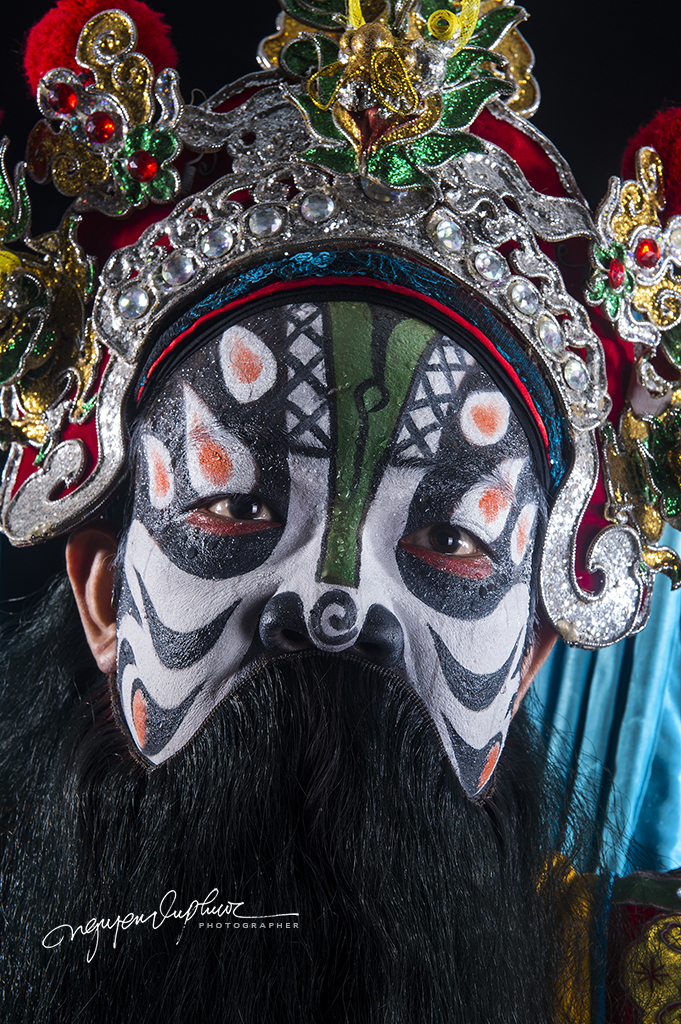
Hát Bội, also known as Vietnamese classical opera or tuồng, is a rich and expressive art form that has been captivating audiences for centuries. Originating in the 13th century and flourishing under the Nguyễn Lords in Cochinchina, Hát Bội combines music, dance, and dramatic storytelling. One of its most distinctive features is the elaborate face paint, which serves as a visual language to convey the character’s role, personality, and moral alignment.
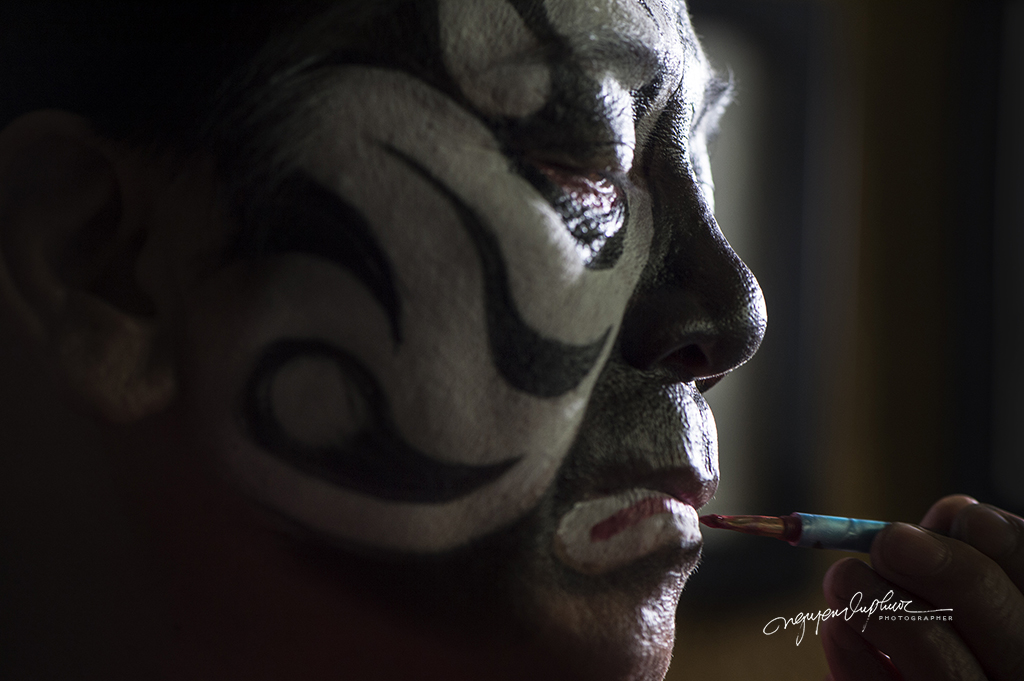
For photographers and cultural enthusiasts, Hát Bội offers a vibrant tapestry of colors and expressions that encapsulate Vietnam’s artistic heritage. Each character’s face paint is meticulously applied, often by the performers themselves, reflecting their deep immersion into the role. This tradition not only showcases artistic skill but also highlights the performers’ dedication to preserving this cultural treasure.
In Hát Bội, characters are not merely dramatic figures but are integral to the very structure of the performance. They embody distinct archetypes, combining elements of both real and symbolic traits. As the article notes, the characters in Hát Bội are portrayed not as realistic depictions of humans but as stylized representations drawn from cultural and moral archetypes, each conveying deep meanings through a complex set of actions, gestures, and expressions.
Key character categories include Kép (male roles), Đào (female roles), Lão (elderly roles), Mụ (villainous women), Tướng (generals), and Yêu Đạo (supernatural figures), all of which are represented with distinctive face paints that further amplify the narrative’s emotional impact. The performance technique of “mô hình hóa” (modeling) is used to express characters through specific visual elements, from face paint to dance. This method adds layers of meaning, linking each character to a larger cultural and symbolic framework.
More info: nguyenvuphuoc.com

👩🎤 Female Characters (Đào): Grace, Power, and Emotion
In Hát Bội, female characters, known as Đào, are categorized based on their personality traits and roles in the narrative. Their face paint and costumes are designed to reflect these attributes, allowing the audience to instantly recognize their character type.
-
Đào Võ (Female Warriors): These characters are depicted with strong, angular face paint, symbolizing their martial prowess and determination. They often engage in combat and are portrayed with fierce expressions.
-
Đào Bi (Female Leads with Soft Charms): Representing grace and beauty, these characters have delicate features and gentle expressions. Their face paint is subtle, emphasizing their elegance and emotional depth.
-
Đào Lẵng (Seductive Women): These characters are portrayed with alluring expressions and bold face paint, reflecting their cunning and seductive nature.
-
Đào Điên (Mad or Unstable Women): Characterized by wild, exaggerated face paint, these roles depict characters with unpredictable emotions and behaviors.
👨🎤 Male Characters (Kép): From Heroes to Villains
Male characters, known as Kép, encompass a wide range of roles from noble heroes to comedic figures. Their face paint varies accordingly, conveying their moral standing and personality.
-
Kép Văn (Civilian Scholars): With refined, elegant face paint, these characters embody wisdom and civility. Their expressions are calm and composed, reflecting their intellectual nature.
-
Kép Võ (Warrior Heroes): Depicted with bold, striking face paint, these characters are portrayed as valiant and righteous, often engaging in heroic deeds.
-
Kép Xéo (Clownish or Comic Characters): Featuring exaggerated, playful face paint, these characters provide comic relief and are characterized by their humorous antics.
-
Kép Con (Child Characters): These roles are performed by children, with simpler face paint symbolizing innocence and purity.
👴 Elderly Characters (Lão): Wisdom and Authority
The Lão characters represent age, experience, and authority. Their face paint is often subdued, with emphasis on features that convey wisdom and dignity.
-
Lão Văn (Elderly Scholars): With serene expressions and subtle face paint, these characters exude wisdom and moral integrity.
-
Lão Võ (Elderly Warriors): Depicted with strong, yet aged features, these characters represent enduring strength and loyalty.
-
Lão Tiều (Old Farmers): Characterized by simple, earthy face paint, these roles reflect the humble and grounded nature of rural life.
🐉 Villains and Supernatural Characters: Tướng and Yêu Đạo
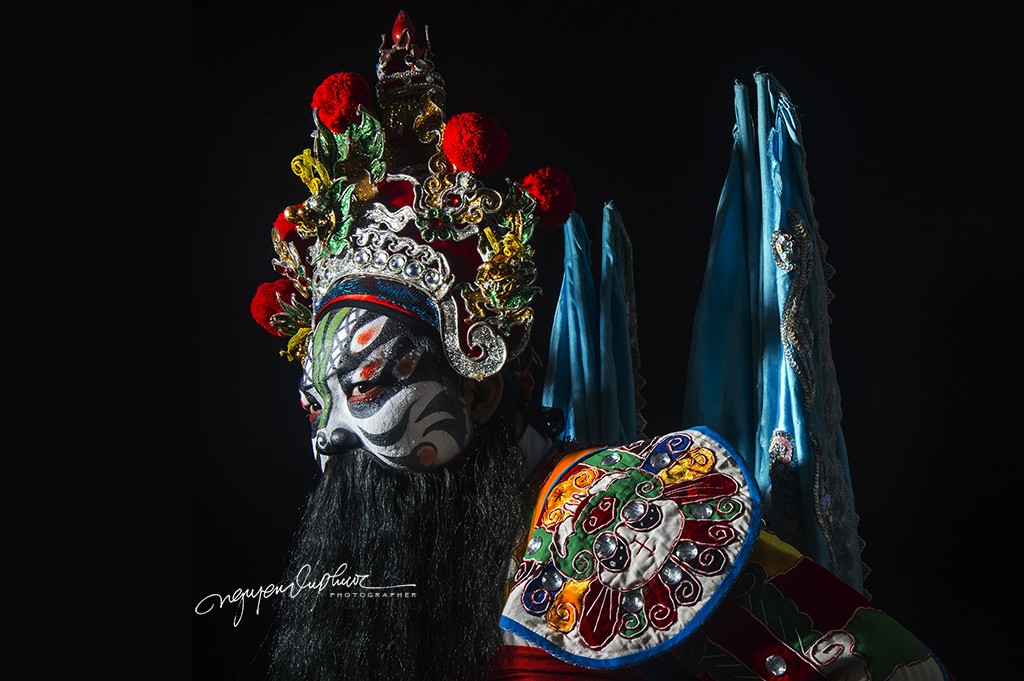
Villains and supernatural beings, known as Tướng and Yêu Đạo, are portrayed with dramatic and often intimidating face paint to signify their malevolent or otherworldly nature.
-
Tướng (Generals): With fierce, commanding face paint, these characters are depicted as powerful military leaders, either heroic or villainous.
-
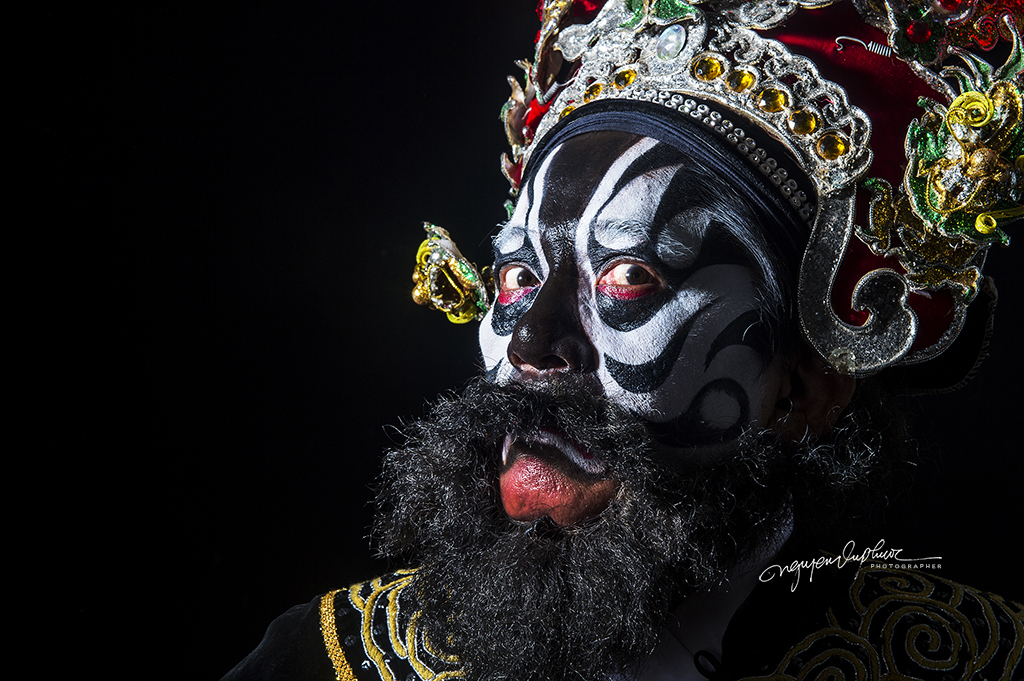
Yêu Đạo (Demons/Sorcerers): Featuring unsettling and elaborate face paint, these characters represent evil forces or supernatural beings, often with exaggerated features to evoke fear.
🧾 Symbolism of Face Paint Colors
The colors and patterns used in Hát Bội face paint are rich with symbolism, each conveying specific traits about the character:
-
Red: Symbolizes loyalty, bravery, and righteousness.
-
White: Indicates treachery, flattery, or moral weakness.
-
Black: Represents a strong, direct character, often a hero or warrior.
-
Green or Blue: Often used for characters with villainous traits or those associated with cunning or trickery.
-
Gold: Typically used for divine or supernatural beings, indicating a higher status or mystical powers.
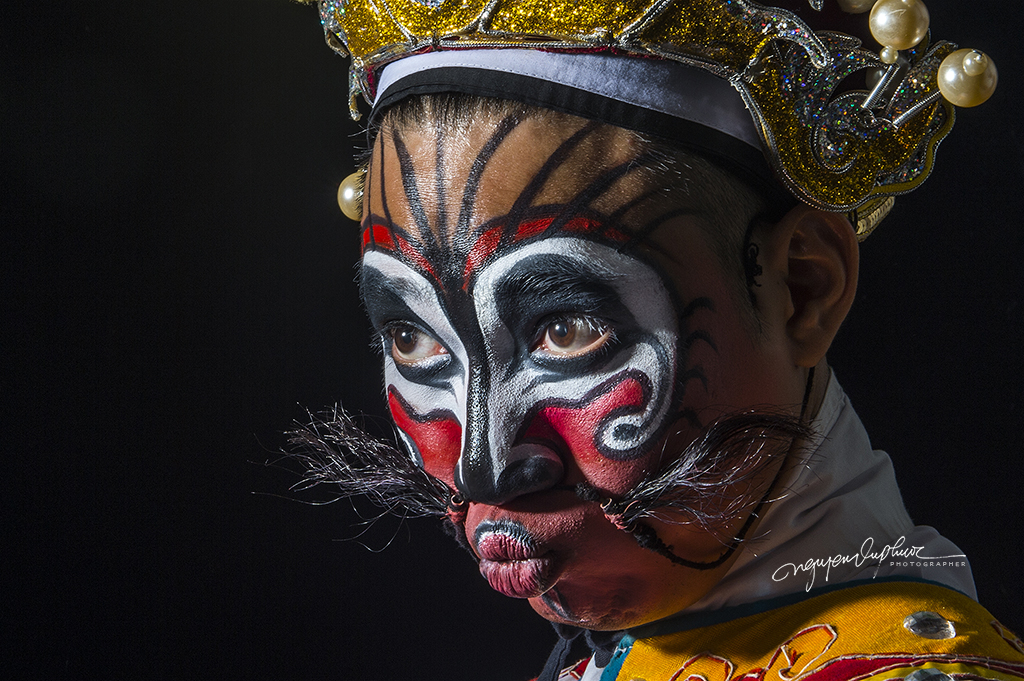
📸 Capturing the Essence of Hát Bội
For photographers, Hát Bội offers a unique opportunity to capture the vibrant colors and dramatic expressions that define this traditional art form. Focusing on the intricate details of face paint and costumes can reveal the depth of character and emotion portrayed on stage. By documenting these performances, photographers contribute to preserving and sharing Vietnam’s rich cultural heritage.
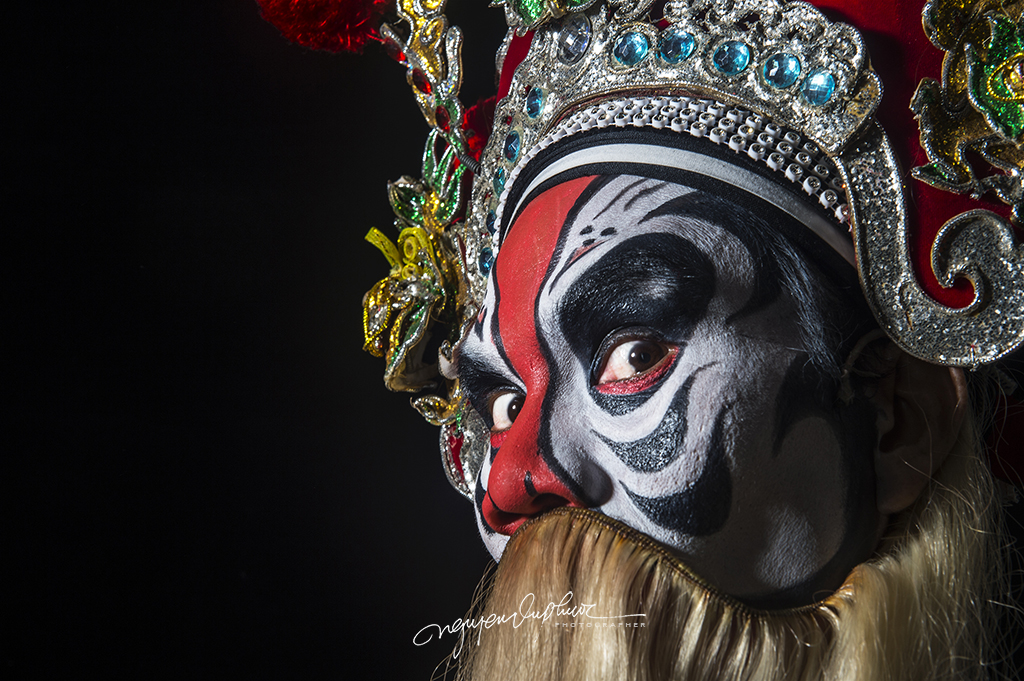
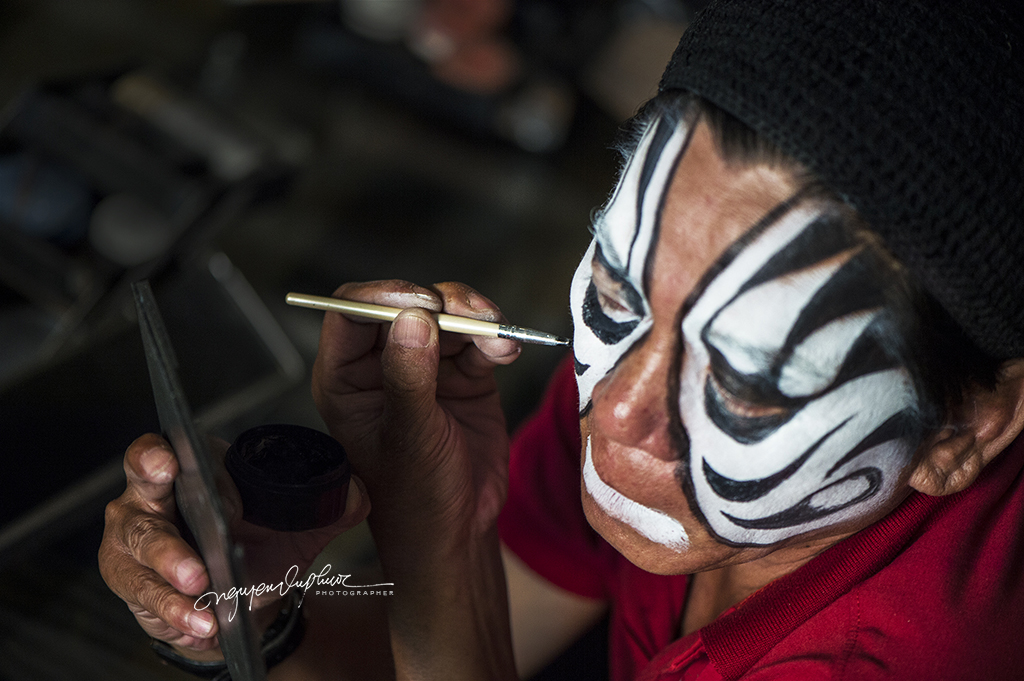
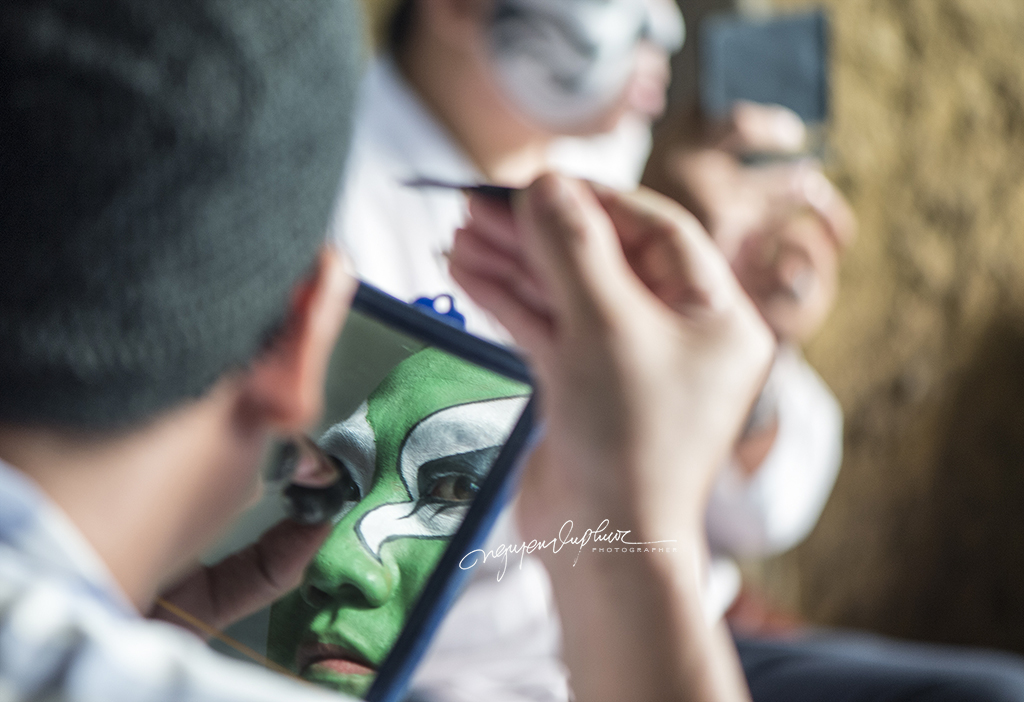
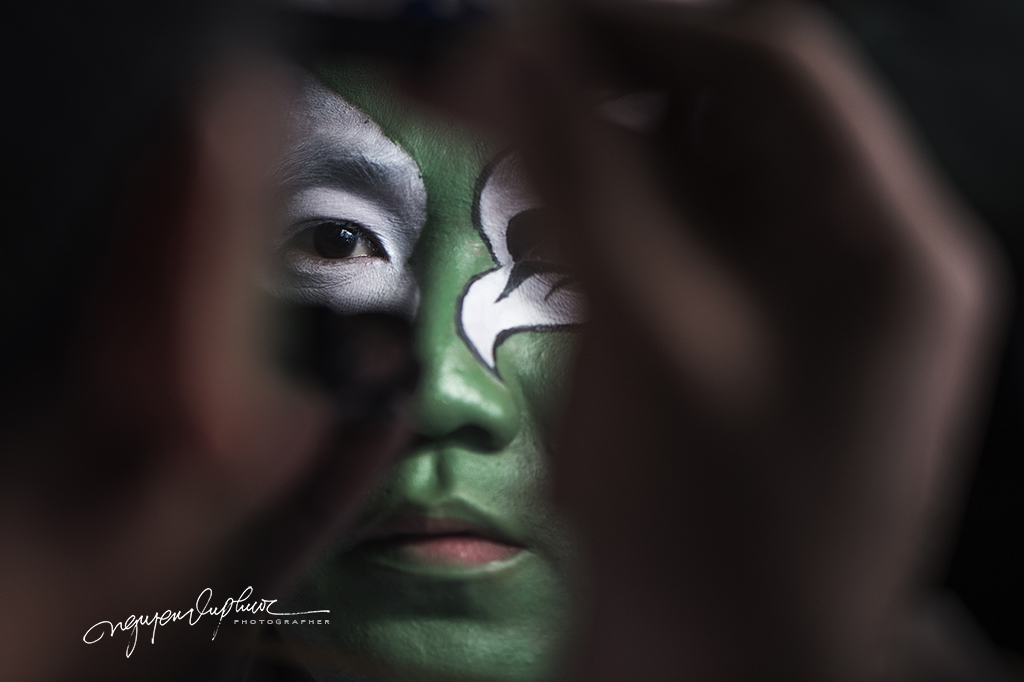
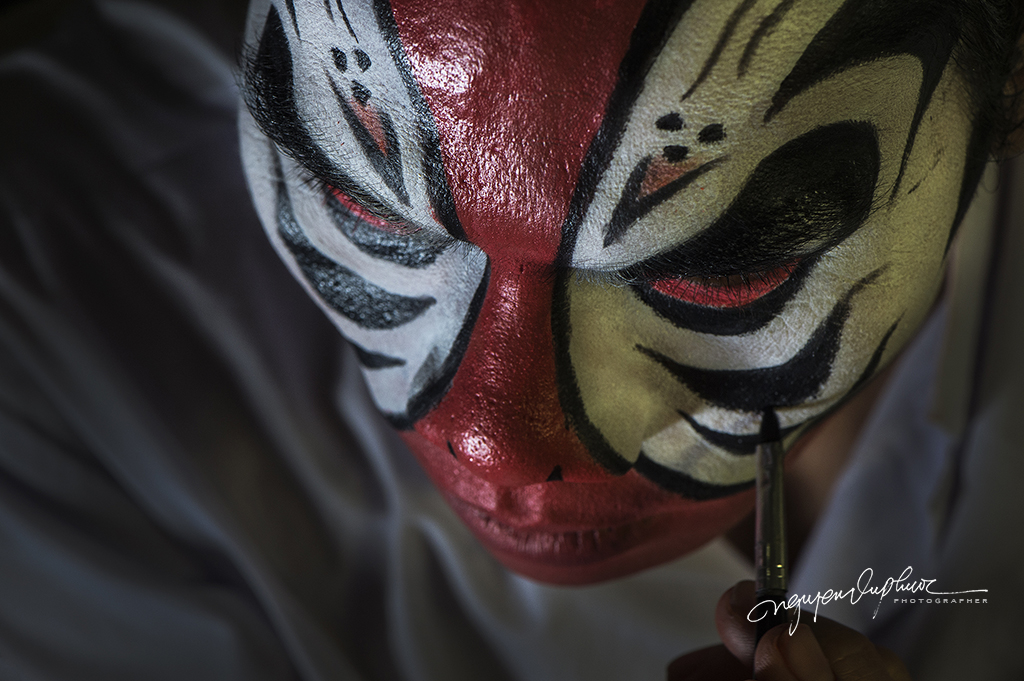
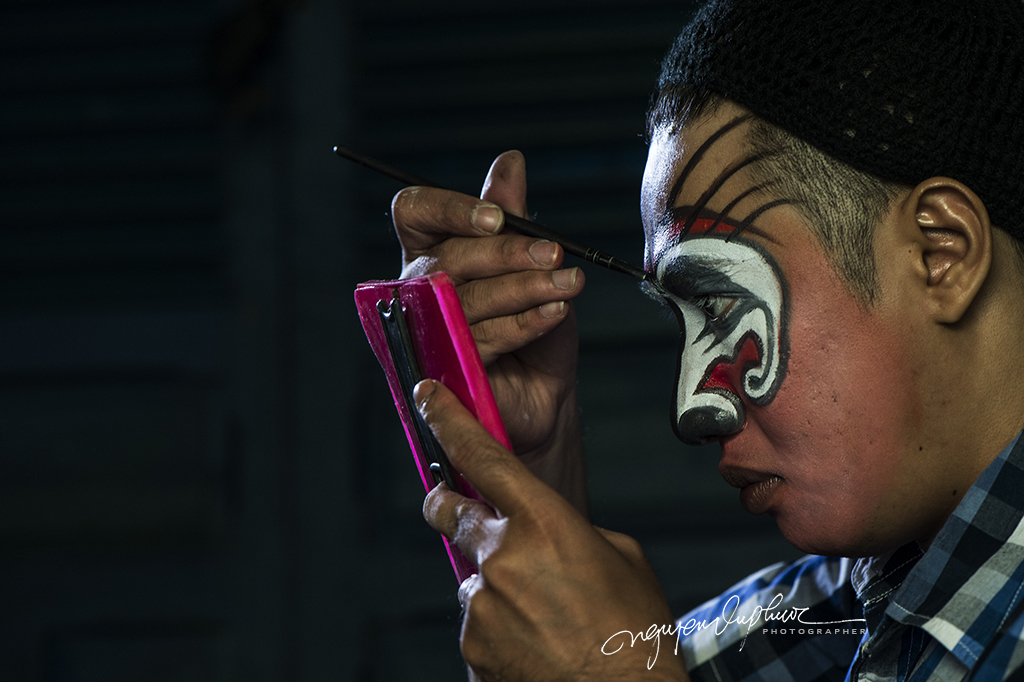
Nguyen Vu Phuoc Photographer and artists of Hat Boi
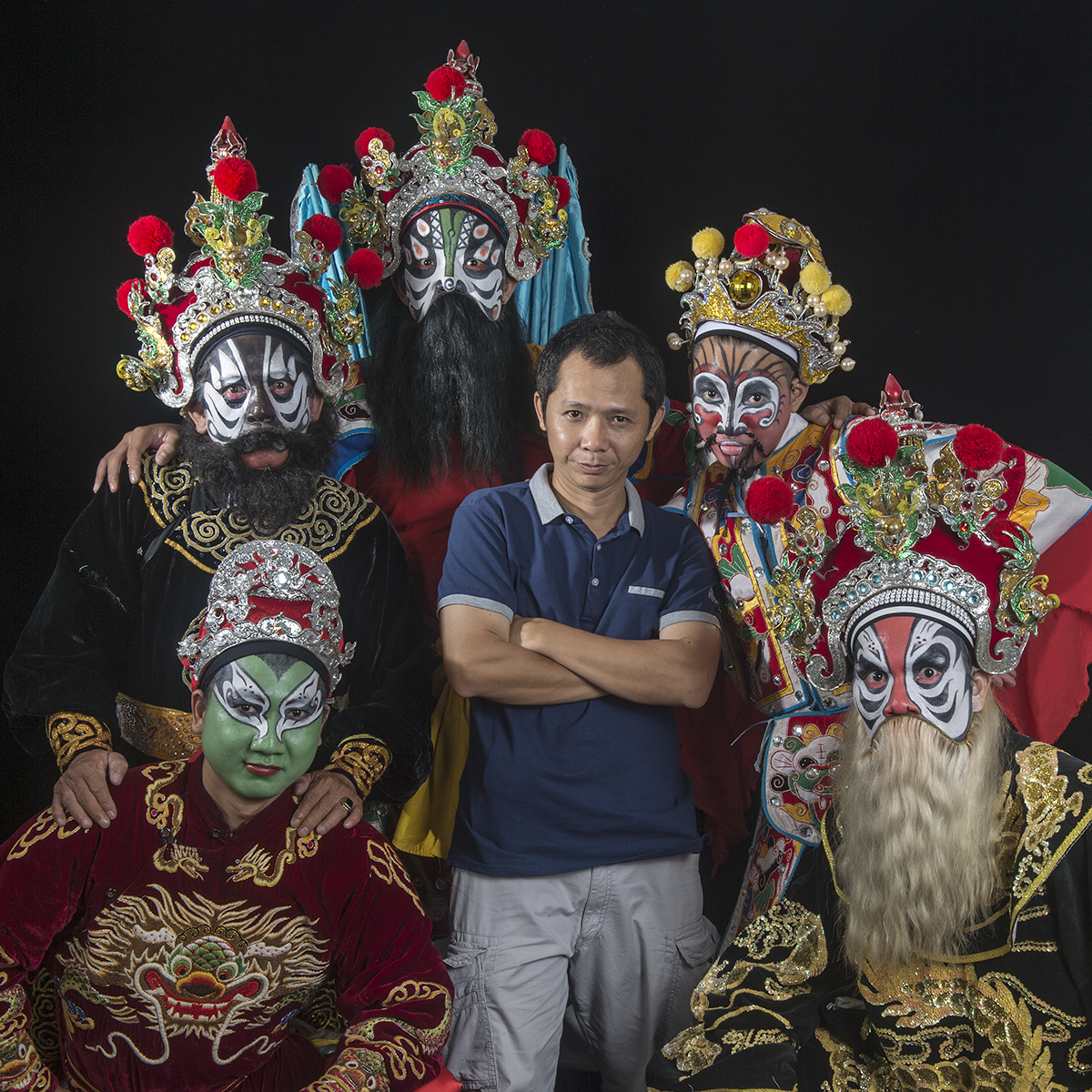
In these photos, you can see some of the characters:
🛡️ 4. Phàn Định Công – The Strategist
Role: Phàn Định Công is a general known for his strategic brilliance and cunning tactics. He is a key figure in military campaigns where intellect triumphs over brute strength.
Face Paint: His face is painted with a mixture of red and black, symbolizing wisdom, power, and the ruthless side of his character. The distinct use of sharp, angular features gives him an air of authority.
Significance: Phàn Định Công’s character represents intelligence, strategy, and the complexities of leadership in warfare. The face paint enhances his role as a calculating, masterful strategist.
⚔️ 5. Tạ Lôi Phuông – The Reluctant Hero
Role: Tạ Lôi Phuông is a reluctant hero who is thrust into situations of war and conflict, despite his personal desires for peace.
Face Paint: His face is painted with shades of blue and green, symbolizing his inner conflict and the struggle between duty and desire for peace.
Significance: Tạ Lôi Phuông’s character represents the moral dilemma of duty versus personal wishes. The face paint adds depth to his internal struggle.
🛡️ 6. Tạ Ôn Đình – The Benevolent Ruler
Role: Tạ Ôn Đình is a ruler who is known for his benevolence, fairness, and desire to protect his people.
Face Paint: His face is painted with a light red hue, often symbolizing wisdom and compassion. The design includes a mix of curved and soft features, indicating his kind and diplomatic nature.
Significance: Tạ Ôn Đình’s character emphasizes the values of fairness, justice, and benevolence in leadership. His gentle face paint reflects his nurturing qualities.
⚔️ 7. Khương Linh Tá – The Loyal Warrior
As mentioned earlier, Khương Linh Tá represents unwavering loyalty and martial prowess. His portrayal uses green face paint to signify his bravery, strength, and noble heroism.
🛡 8. Tạ Lôi Nhược – The Young Hero
Role: Tạ Lôi Nhược is a youthful hero, full of potential and energy, though still learning the ways of leadership and battle.
Face Paint: His face is painted with a mix of gold and light green, symbolizing his youth, strength, and the potential for greatness.
Significance: Tạ Lôi Nhược’s character serves as a representation of the emerging generation’s hopes and dreams, symbolized through vibrant, fresh face paint. His youth and vigor set the stage for future challenges and triumphs.